Answers · Choosing your AI tools
Claude Cowork vs Claude Code: which fits your work?
The short answer
Claude Cowork vs Claude Code comes down to one question: what are you handing over?
Cowork is Anthropic's agentic workspace for everyday knowledge work. You hand off a task and Claude completes it across your files and tools, the reports, spreadsheet reconciliation, contract review, note synthesis kind of work. Claude Code is the coding agent: it reads a project, writes and edits files, and runs commands to build software.
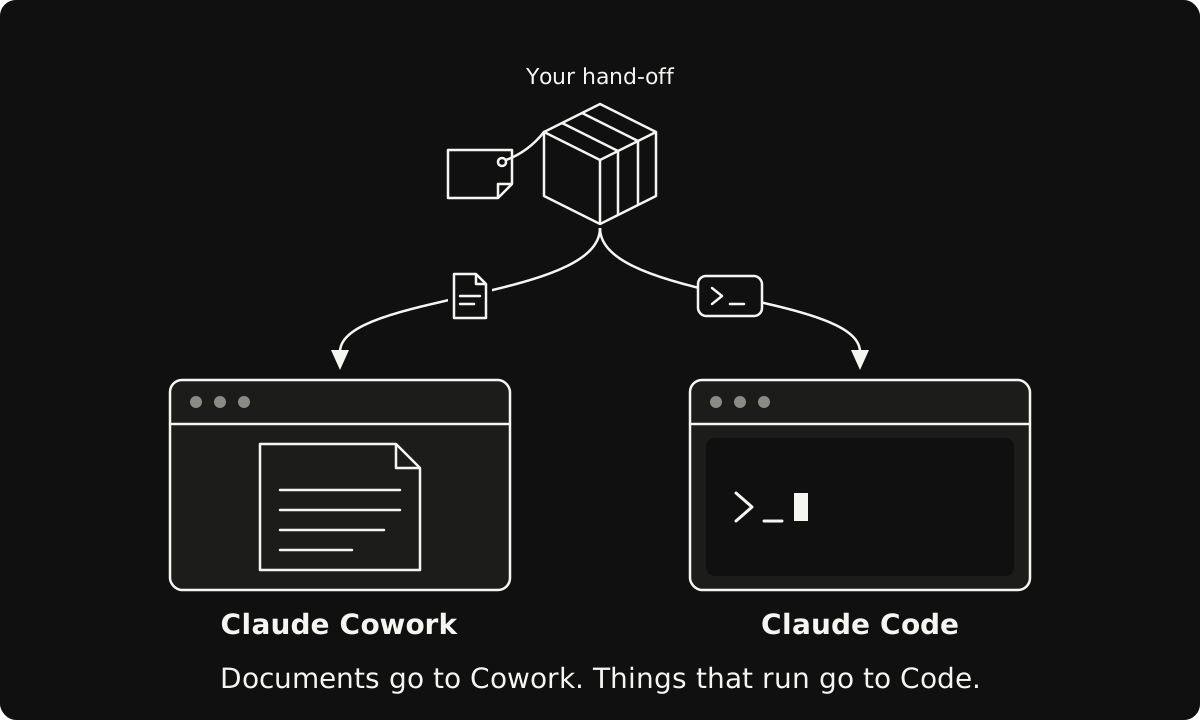
Both need a paid Claude plan. Cowork runs on macOS, Windows, ChromeOS, and Linux, with web and mobile in beta, per Anthropic's product page checked 2026-08-06. My simple rule: if the deliverable is a document, start with Cowork. If the deliverable runs, start with Code.
Anthropic ships two agents now, and the names don’t exactly explain themselves. Here’s how I’d pick between them, plus the part where the line gets blurrier than either product page admits.
What does Cowork actually do?
Anthropic’s own framing is “hand off a task,” and the examples on their product page are the unglamorous middle of knowledge work: generating and scheduling reports, reconciling spreadsheets, reviewing stacks of contracts, synthesizing notes (claude.com/cowork).
The signature move: it works across your files instead of inside one chat window, and you steer it rather than sit with it. You come back to finished work and review it.
Cowork runs on macOS, Windows, ChromeOS, and Linux, with web and mobile in beta, and it needs a paid Claude plan (Anthropic’s product page).
Where does the line actually blur?
Here’s the part the product names hide: Claude Code is not just for engineers, and a lot of non-coding work is secretly file work.
Claude Code runs in any folder. So a directory of markdown notes or newsletter drafts is completely fair game. Meanwhile, Cowork will happily produce things that feel a lot like building (a working spreadsheet model is software wearing a costume, if we’re honest).
So the cleaner test than “am I a developer” is: what is the finished thing? A brief, an analysis, a reviewed stack of contracts? Cowork territory. A site, a script, an automation that runs again next week? Claude Code territory. And don’t let the terminal reputation scare you off, because a desktop app ships too.
Do you have to choose?
Nope. And nothing stops you from having both open in the same week for different jobs.
They share the same paid plan, so the real cost of trying each on its natural work is one afternoon. Give Cowork a reconciliation you’ve been dreading. Give Code the small build you keep postponing. And if you want the full head-to-head on the coding agents themselves, I ran Codex vs Claude Code vs Cursor so you don’t have to.
The split will be obvious by Friday.
Subscribe to being AI native
Join the hundreds of ambitious minds who kickstart their day with the AI world's weirdest, wildest stories and insights.
No recycled headlines. No BS. Just a fun, quick read.