Answers · Claude Code
Claude Code Router: what it is and who it's for
The short answer
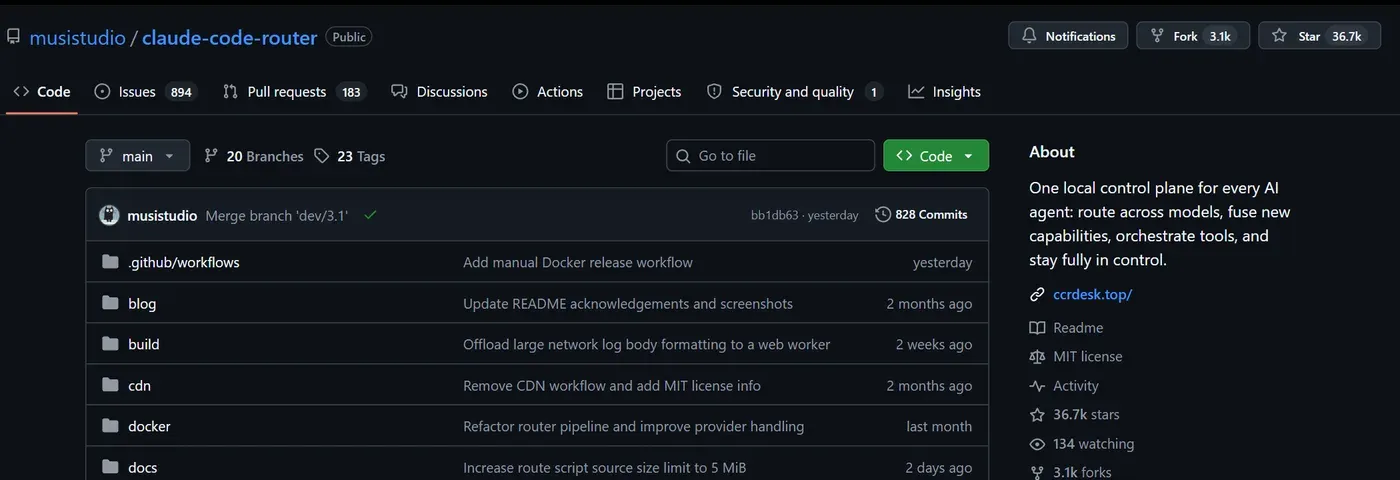
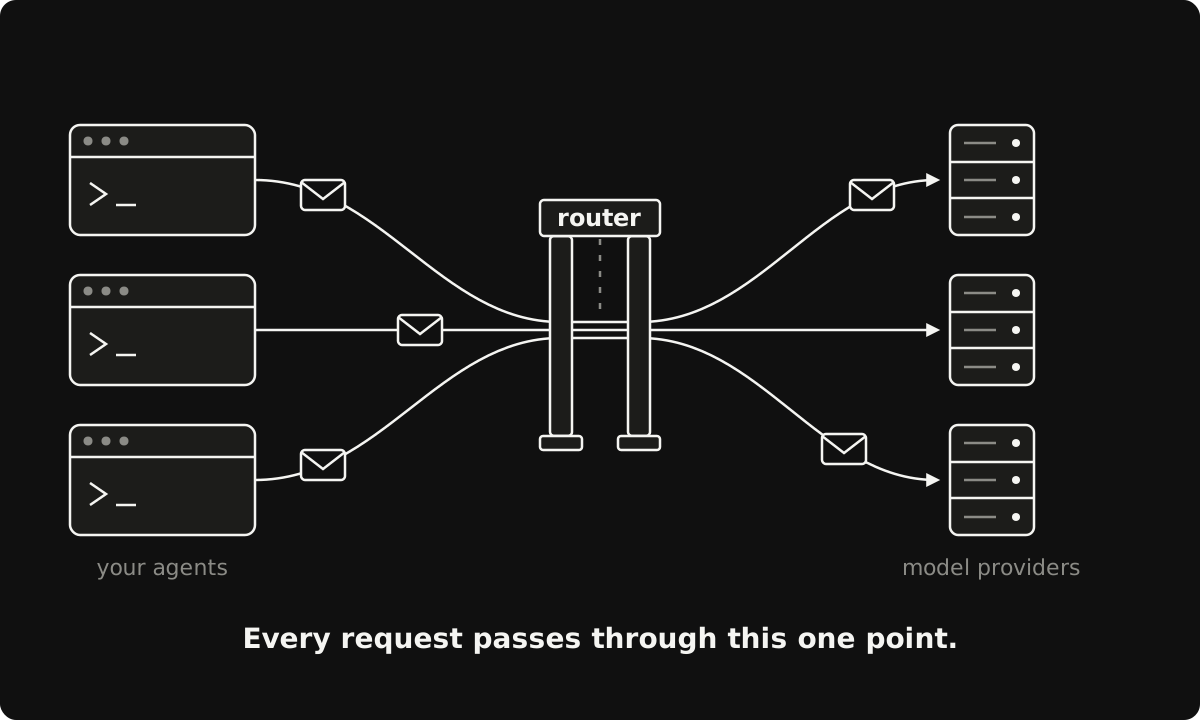
Claude Code Router is a community-built open source project, from the GitHub user musistudio, that puts a local gateway between coding agents and model providers.
Point Claude Code at it and your requests can route to OpenAI, Gemini, DeepSeek, OpenRouter, Kimi, Mistral, and others instead of, or alongside, Anthropic's models. It runs as a local server and ships as a desktop app, an npm CLI, or a Docker deploy. MIT licensed, roughly 36,500 GitHub stars as of 2026-08-06.
And here's the part the name hides, which I think matters: this is not an Anthropic product. It's popular, it's actively maintained, and it's entirely unofficial.
The name makes it sound official. It isn’t. Let’s start there, because everything else about this tool makes more sense once you know that.
What problem does it actually solve?
Model flexibility. Claude Code is built to run against Anthropic’s models, and the router exists for people who want the Claude Code interface with a different engine behind specific requests. A cheaper model for routine work. A local model for private code. A specific provider some client requires.
The project describes itself as “a local model gateway and control plane for coding agents,” and it manages more agents than just Claude Code (the repo).
What should you check before using it?
Here are the 3 checks I’d run, in order:
- Whether you need it at all. Claude Code already ships a
/modelcommand that switches between Anthropic’s own models mid-session (slash commands). That covers the most common reason people go looking, which is spending less on routine tasks. - The terms. A routing tool sits between your account and the provider. Read Anthropic’s usage terms yourself before wiring a subscription through anything unofficial (and the same goes for every provider you route to). Don’t take my word for it, or the router’s.
- The trust question. Anything sitting in your request path sees your prompts and your code. The repo is open source, so the code is inspectable, and that’s the honest trade on offer. But inspectable is different from inspected by you.
So who actually benefits?
People running multiple coding agents against multiple providers, and people with a hard requirement that Claude Code alone doesn’t meet.
If you’re still choosing your first coding agent rather than orchestrating several, the plainer question comes first, and my Codex vs Claude Code vs Cursor guide answers it. The router is a power tool, and power tools reward people who already know which way the blade spins.
Subscribe to being AI native
Join the hundreds of ambitious minds who kickstart their day with the AI world's weirdest, wildest stories and insights.
No recycled headlines. No BS. Just a fun, quick read.