Answers · Building solo
What does being AI native actually mean?
The short answer
After going to hundreds of AI themed events I've learned that while everyone is talking about being AI native, that also means they have their own definitions for it. So don't come after me when you disagree with my definition - it's healthy for us to have discourse about it don'tcha think?
For me being AI native is all about how do you ACTUALLY embrace AI enough so that you benefit from the best parts of it while still being creative, still being full authentic, and giving real human value to the world, faster and better than ever.
Yes, a lofty goal. But like many great inventions AI more than anything else has shown that if you go all in and adopt it for everything, your brain and sense of self will wither away from lack of use and muscle building.
And the best scoreboard for all this is workflows. One permanent workflow improvement per week beats using AI every day, because it measures what meaningfully changed. Alrightyyyy - lets dig in.

It’s hard for me not to smile when I hear people talk about being AI native. I was an an event just this past week and someone said they were working towards ‘being more ai native every day’. When I asked them, what does that ACTUALLY mean though? I’ve never gotten the same answer twice, but the themes stay consistent.
People hate feeling left behind. They don’t want to lose in whatever race we’re all running in. If we’re not ‘tokenmaxxing’ then we’re not using our time wisely and therefore our life is a complete waste. (This is sarcasm, just to confirm)
But as easy as it is to poke fun at this mentality…I’ve had it too! I totally get where they are coming from, and struggling with this has led me to want to create this site and force myself to define exactly what i want out of AI, and how I want it to be integrated in my life.
The AI hatred is real, and I get where people are coming from there too. So when I tell random people I want to be AI native, I get a variety of different looks from horrified, to barely contained excitement, to some mixture of the two.
For me, AI can benefit many aspects of my life, and its important that I not only define those but also make it clear where the boundaries are. You’ve got to do the same, and no prompt pack or Claude skill can do it for you.
The priority for me is to find real AI use cases for work, that improve work and help me make more money, easier, faster, and with less risk. The dream, am I right?
A peek under the hood
Whether that’s proveworth.com or anything that I’m building with AI, here’s how I’m currently looking at my workflows and thinking about integrating them.
-
I first ask, what does success for this thing actually look like?
Not pizza party success, real dream scenario workplace success. We did this at monday.com all the time, and was one of my core takeaways from working there for nearly a decade.
We always asked before working on anything: What does success really look like, and how do we measure it? Working backwards from a clear target sounds simple, but so few people did it that we often made the mistake of forgetting this SOP despite it being ‘core DNA’ to the monday collaboration process.
-
Then it’s time to put every step under a microscope
Work is rarely brand new for all parties. And unfortunately as we got bigger as a company this got harder and harder. Now even as a solo operator myself, this step is hard. But the reward is too good to pass up. I have to ask myself about each step - what value does this bring? Does it need to be here? What is the REAL cost if I were to cut it completely from this workflow?
My biggest struggle here as been in the world of content creation and video editing. I could just make AI videos and AI articles, but I’m sitting here yelling into my computer because I care about y’all and I care about making stuff I can be proud of. Sometimes I’ll heavily edit or even draft stuff with AI. But the idea for it existing and what’s being said, I do want that to come from me.
Funny enough, I had AI do a draft of this from my notes but the output was terrible for humans. Great for AI agents im sure but I want this to appeal to y’all, so here we are talking at my computer!
-
Then you delete the hell out of more than you’d feel comfortable with
We alluded to this early, and this is such a simple practice that takes an immense amount of effort and energy. You gotta delete stuff. Kick it to the curb and remember that worst case scenario you can let it back in. It doesn’t have to be gone permanently. But without kicking the process out of the metaphorical house, how would you know it needed to leave in the first place?
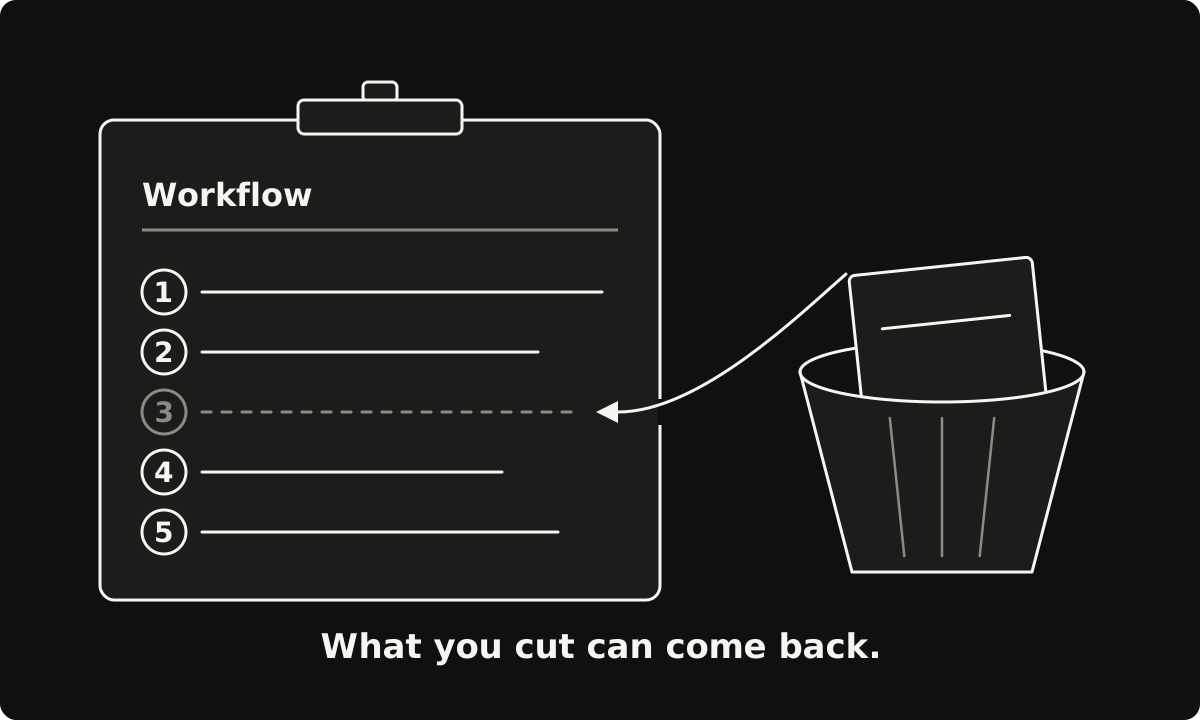
Another key example of this in the workplace is that people want to feel important and valuable. That meant at monday that even despite knowing and operating from these principles, we had so much stupid shit that didn’t matter in so many processes that became completely overloaded.
It used to drive me crazy seeing all that waste and pointless effort. But now on my own, it happens even when I have no one else to blame but myself. It’s the beauty of being human. Improvement is a neverending game.
Delete parts from your process to the point where you question your sanity. It might end up making you more sane.
-
Slowly add things back in that are requirements and check on them frequently
How this is taking shape in my own life and workflow is with my YouTube videos. I used to overproduce the hell out of them, want to edit them to perfection, but then I realized the worst case scenario had become true.
I wasn’t publishing a single damn video in weeks, months even. Doesn’t matter how good a video is if it never gets published, does it?! Obvious yes, but I know tons of amazing people who are sitting on days of content because it doesn’t hit their bar for perfection.
One of the requirements for making good content people love is that they need to see some damn content in the first place. Add back in what’s necessary so you can keep going and keep up momentum. Momentum is one is the most valuable feelings you can harness when it comes to creating meaningful things for people to consume.
And you should be checking in on how this process works regularly. If you’re working with other people, this can take many forms. It can be asking for clear dates for completion, questioning them, and then following up regularly.
Yes, it’d drive me crazy if my boss kept asking me when things would be updated or done. But also yes - those things ended up getting done faster. You need to do the same with your processes, especially when you’re solo.
-
Then figure out, with AI, what can be fully automated and what should stay the same.
This is the funniest part to me, but like a sad knowing kind of funny. Because again, it’s been part of my life time and time again.
Now in the age of AI it’s so easy and fun to automate things…people do it as the first step, and not the last where it should be. They love creating pointless automations that serve no purpose other than wasting tokens and time. Is there anything MORE awful than wasting your time?
Automation at its best demands that its at the end of a workflow, once you’ve truly understood it. I’ve seen folks claiming that they do it a few times and then they have mastery over it. No, no you don’t. And yes, that’s why 99% of automated content sucks and no one would read.
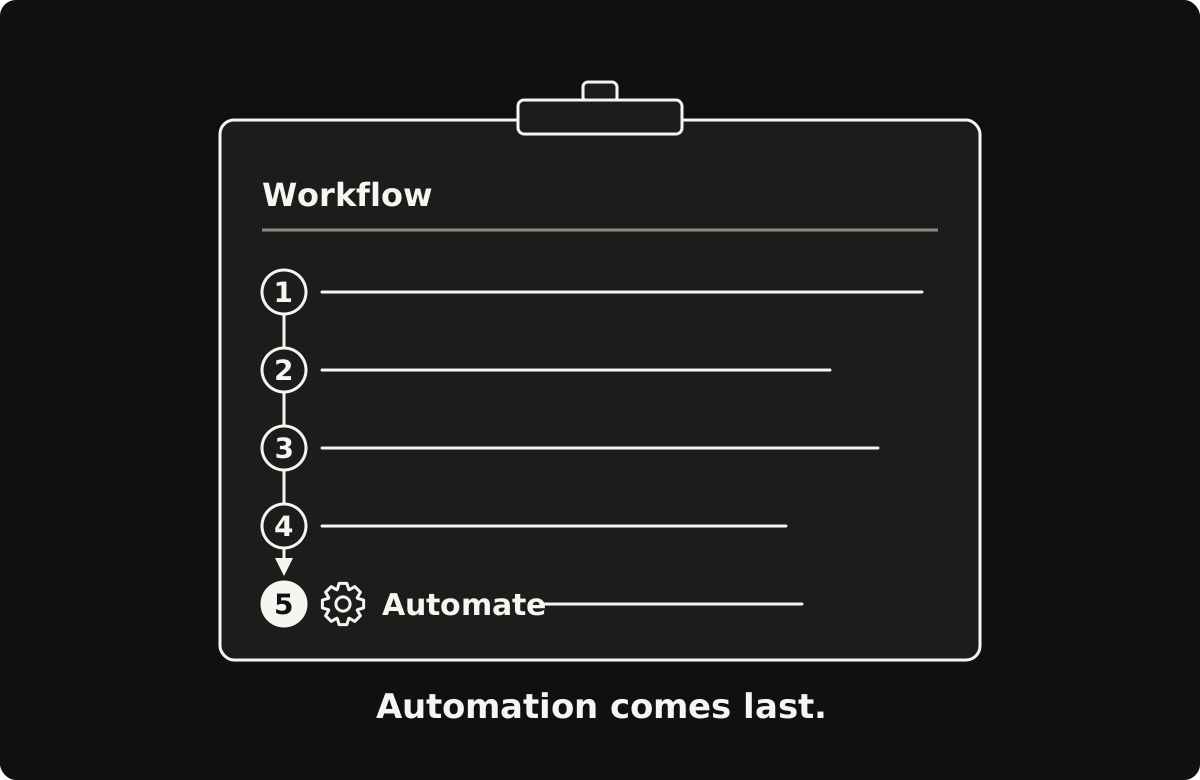
If the creator doesn’t respect the time it takes to make something good, why should the reader respect your content with their attention?
With a clear understanding of the process end to end…THEN automation becomes a thing of beauty. But most people skip this step, and it shows.
The behaviors in practice
With a firm process for your workflows in place, here are some good rules of thumb that I’ve come to appreciate after working with AI in the best and worst ways.
- Deeply learn the process. Try many things in many ways before you automate.
- Ship the ugly version. Again, in the realm of doing stuff, its better to do and publish something than nothing at all.
- AI writes the first draft, never the last. All these models produce impressive looking work enthusiastically, including the wrong kind.
- Judgment is the job. Recognizing good work when you see it is what keeps you from becoming slop.
- Show receipts. Anyone can tell, and models can tell. Very few people can do and show the work of it being done.
- Update things. When you get something wrong, the correction becomes content too.
- Watch for entropy. Ask which belief about what you can’t do stopped being true without telling you.
Note that nothing we’ve said so far depends on which model or service you pay for. You gotta feel these things out my friends.
Is AI nativeness a mindset or a skill set?
Mindset first. The skills underneath are boring, which is exactly why people skip them:
- Defining what the actual problem is
- Building a workflow out and seeing what works and what doesn’t
- Challenging your own assumptions, and making the model challenge you back is both a skill and a skill.md
- Recognizing good work when you see it comes from viewing slop and recognizing why its ugly/bad
Problem, experiment, measure, keep what works, note down what doesn’t to teach both you and the model (most people skip this step) and only THEN can you go again.
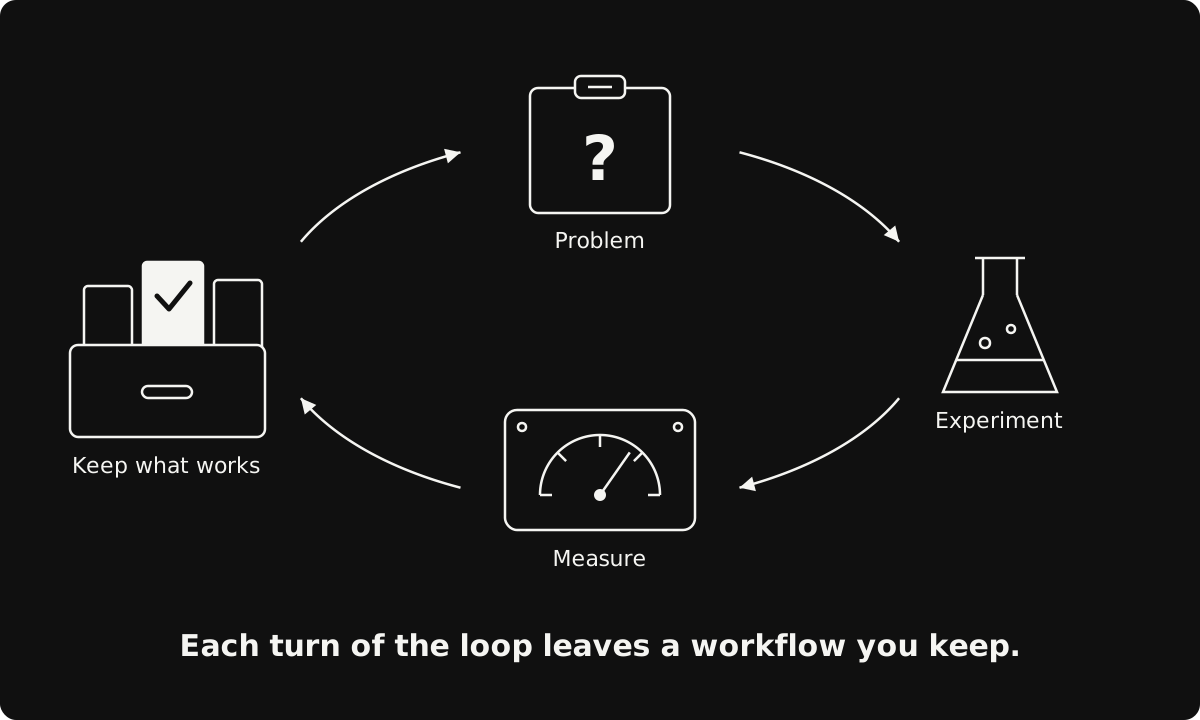
Every time you do the work, you have to learn from it. The models definitely can in the right harness, which is how one person ends up directing five jobs instead of doing them. What you keep often lives in a file the model reads every session, like a CLAUDE.md file. Taking care of that is a whole ‘nother discussion but the short version is, do monthly checkups on it and make sure its got the most relevant and good info on it.
How do you know it’s working?
I mean… count the workflows that got permanently better.
Tools tried, videos watched, prompts polished, content generated. None of those prove a single thing in your week got easier.
One permanent workflow improvement per week. That’s the target, and it’s the whole argument in everyone is falling behind in AI. Set the target that makes you most proud of the work done. But if you don’t measure it, it won’t get managed.
What about AI fluent, AI first, and AI assisted?
Everyone draws the lines a little differently and none of the four has an official definition either, so these are the working ones I go by.
AI assisted work runs the old process with a model helping at a few points inside it. The process itself is untouched.
AI fluent describes skill with the tools. You know the models and you pick the right one for the job.
AI first is usually a company policy: try the AI approach before hiring for it or building it by hand.
AI native is leveraging the best of AI without losing your soul and the best parts of the human condition.
Where do you start?
Don’t make this more complicated that it needs to be y’all. Take one recurring annoyance from this week and put it through the loop once. Keep the good shit, drop the rest.
You’ll wanna rewrite my definition once you’ve run the loop a few times, which is the whole idea.
Subscribe to being AI native
Join the hundreds of ambitious minds who kickstart their day with the AI world's weirdest, wildest stories and insights.
No recycled headlines. No BS. Just a fun, quick read.